
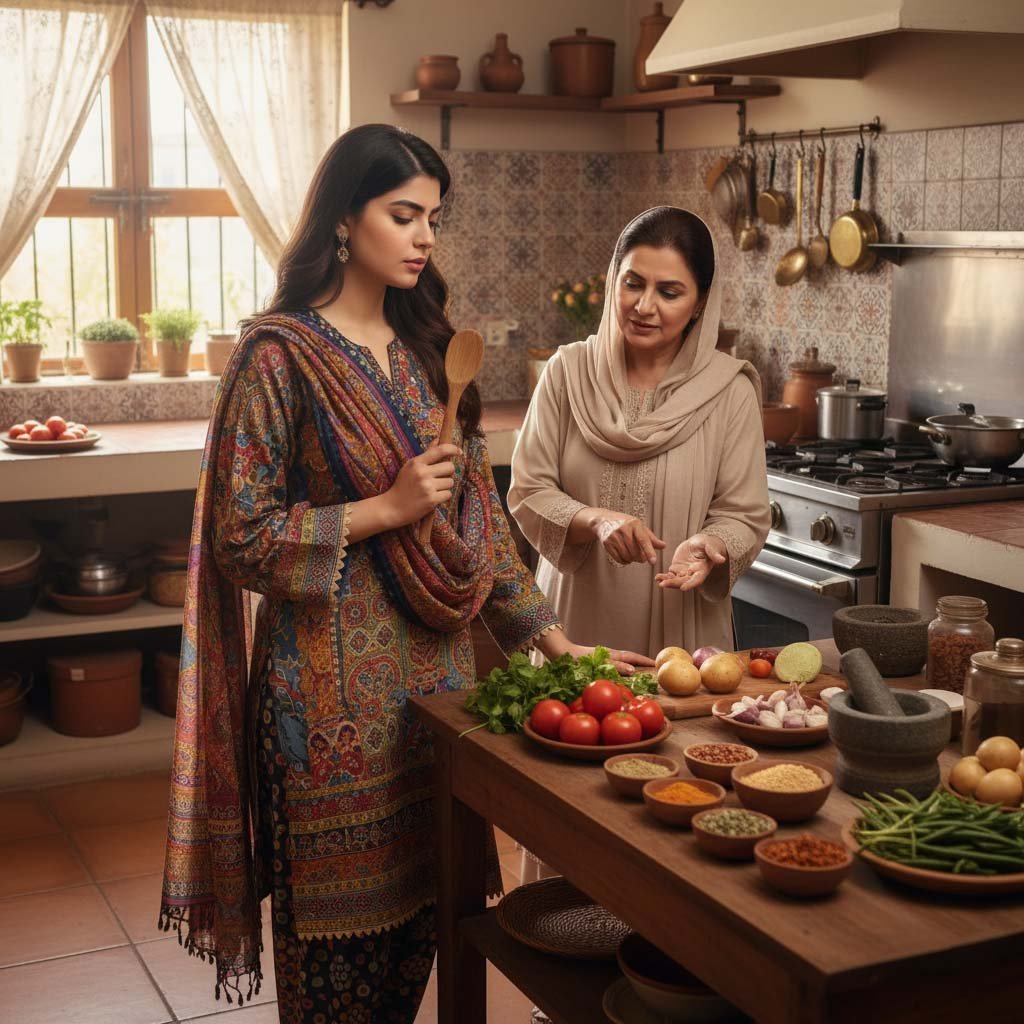
Introduction: The Eternal Question – Aaj Kya Pakaye?
Every married woman in Pakistan knows this question all too well: “Aaj kya pakaye?” It starts in the morning, lingers throughout the day, and somehow becomes the hottest debate by dinner time. The husband wants one thing, the kids demand another, and of course, the mother-in-law always has her own suggestions – usually something that requires twice the effort! What seems like a simple question often turns into a family board meeting, where everyone has an opinion, but no one wants to step into the kitchen. This everyday dilemma is not just about food, it’s about love, responsibility, and a little bit of comedy that plays out in every Pakistani household.
Why Is Deciding Dinner Such a Big Issue in Pakistani Homes?
In Pakistan, food is more than just a meal – it’s culture, comfort, and tradition all served on one plate. Dinner is the time when the whole family gathers, so naturally, expectations are high. Every family member wants their favorite dish, but no one considers the time, budget, or energy it takes to make it.
For many married women, the challenge lies in balancing everyone’s preferences: the husband might crave biryani, the kids scream for nuggets or pasta, while the mother-in-law gently (or not so gently) insists on daal chawal because “yeh sehat k liye behtareen hai.” Add to this the limited grocery supplies at home, and the pressure multiplies.
This daily debate reflects a bigger cultural truth: food decisions in Pakistani homes aren’t just about taste, they represent family dynamics, hierarchy, and a never-ending tug of war between convenience and tradition.
Top Fun & Relatable Moments in the Dinner Debate
Every Pakistani household has its “aaj kya banay ga?” moment, and honestly, it could be turned into a full TV drama. Here are some of the funniest and most relatable highlights:
- The Silent Stare Battle – When the wife asks, “Aaj kya khana hai?” and the husband replies, “Kuch bhi bana lo.” But later complains, “Yeh kyun banaya?”
- The Grocery Surprise – You finally decide to make chicken karahi, only to realize… there’s no chicken. (And the sabzi wala is closed.)
- Kids vs. Adults War – The children chant “burger! pizza! pasta!” while the elders insist “roti aur salan hi khana hai.”
- Mother-in-Law’s Wisdom – She always has that “healthy” daal suggestion, reminding everyone how she managed a family of 10 with just daal chawal back in the day.
- Last-Minute Guests – Just when you’ve settled on aloo ki bhujia, unexpected guests arrive, and suddenly you’re scrambling to turn it into a “special dinner.”
- The Leftovers Drama – Suggest serving yesterday’s biryani, and watch the family react like you committed a crime.
These moments show why dinner isn’t just cooking—it’s a comedy show that happens every evening in almost every Pakistani home.
Most Common Dinner Options in Pakistani Homes
No matter how big the debate gets, somehow, dinner in Pakistani homes usually circles back to these classics:
- Daal Chawal (Lentils with Rice)
The ultimate “safe option.” Quick, simple, and always filling. Loved by mothers, tolerated by kids. - Chicken Karahi / Curry
Probably the most repeated dinner of the week. Easy to cook, and no one really complains… unless it’s been three nights in a row. - Aloo Bhujia / Aloo Gosht
Potatoes are the real heroes of Pakistani kitchens. Whether with meat or on their own, they save the day. - Biryani / Pulao
A family favorite but usually reserved for weekends or when guests show up. The “royal treatment” meal. - Roti with Seasonal Sabzi
From bhindi to gobhi, sabzi is always present at least once or twice a week—though kids might disagree with the frequency. - Paratha & Omelette
The emergency dinner option when no one wants to cook—fast, simple, and always satisfying. - Fast Food Twist
Shawarma, roll paratha, or a quick order from the nearest dhaba. Sometimes it’s easier to let foodpanda decide dinner.
These are the staples of almost every Pakistani household—and no matter how many times families argue, they always rotate among these dishes.
Quick Tips to Make Dinner Planning Easier
- Weekly Meal Chart
Sit with the family on Sunday and plan the week’s dinners. This way, everyone knows what’s coming, and fewer debates happen daily. - Family Voting System
Write down 5–6 common dishes on paper and let the family “vote” every night. The majority wins, and no more endless arguments. - Mix It Up
Balance the week with 2 days of meat, 2 days of sabzi, 1 day of daal, 1 day of rice, and 1 fun “treat meal.” Keeps things exciting. - Quick & Easy Options
Always keep eggs, frozen parathas, and ready masalas handy. Perfect for those days when you just don’t want to cook. - Assign Cooking Days
If possible, share the load—husband, kids, or even mother-in-law can pitch in once a week. It’s not only fair but also fun!
Sample 7-Day Dinner Menu for Pakistani Families
Day 1 (Monday): Chicken Karahi with Roti & Salad
Start the week strong with everyone’s favorite chicken karahi. Quick to make, delicious, and guaranteed to please the family.
Day 2 (Tuesday): Aloo Gobi with Roti & Achaar
A healthy sabzi day that balances the week. Pair it with achar and raita to make it more exciting.
Day 3 (Wednesday): Daal Chawal with Kachumber Salad
Classic comfort food in every Pakistani home. Light, nutritious, and a great mid-week meal.
Day 4 (Thursday): Qeema with Paratha or Chapati
Qeema never goes out of style. Whether it’s chicken, beef, or mutton, it’s a versatile dinner option.
Day 5 (Friday): Biryani with Raita & Salad
Friday special! Biryani brings the whole family to the table without complaints.
Day 6 (Saturday): Grilled Chicken Tikka with Naan
A weekend treat—lighter than biryani but still full of flavor. Serve with mint chutney for the best taste.
Day 7 (Sunday): Haleem with Naan or Roti
Perfect for Sunday family gatherings. Hearty, filling, and loved by everyone.
Conclusion: Embrace the Fun of the Dinner Dilemma “Aaj Kya Pakaye?”
At the end of the day, “Aaj kya pakaye?” may never have a simple answer, and that’s okay. This daily dinner debate is part of the fun, laughter, and sometimes even drama that makes Pakistani households so lively. Whether it’s mom suggesting biryani, the kids demanding nuggets, or your mother-in-law recommending daal, it all reflects the love and variety in our food culture. Instead of stressing, embrace the chaos, keep a few quick recipes in mind, and remember — every meal is a chance to bring the family together around the dining table.